

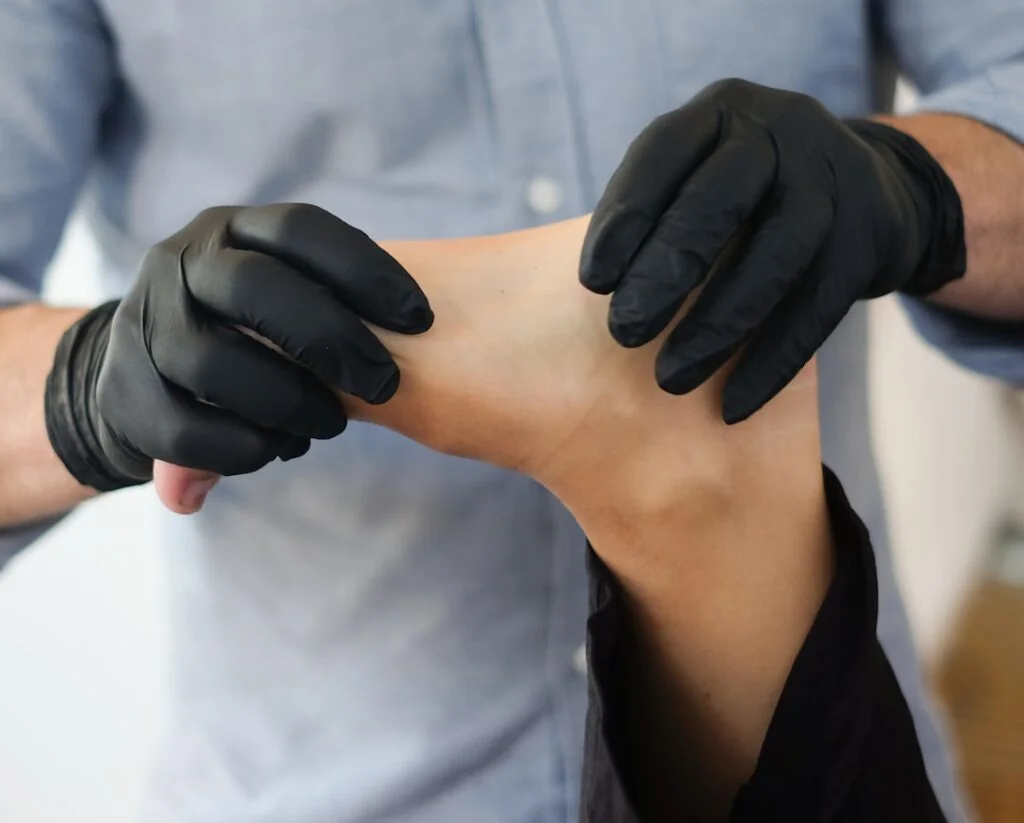
Plantar Fasciitis Treatment in Bridgewater, NJ
That first painful step out of bed. The sharp twinge after a long shift on your feet. The deep ache that settles in by evening. Plantar fasciitis is one of the most common reasons adults across Central New Jersey seek podiatric care, and the good news is that most cases respond well to conservative treatment when addressed early. At PS Foot and Ankle in Bridgewater, NJ, our team helps patients from Somerset, Hunterdon, and Middlesex counties understand the source of their heel pain and build a plan that fits their daily routine. This guide walks you through morning relief, recovery expectations, and knowing when professional plantar fasciitis treatment in Bridgewater NJ becomes the right next step.
Your Complete Guide to Heel Pain Relief: What’s Inside
Heel pain is rarely a single problem with a single fix, which is why this guide is organized by stage rather than by treatment. Whether your first concern is the morning stiffness that fades after a few minutes or a chronic ache that has lingered for months, you can jump directly to the section that matches your situation today.
Use the navigation below to move through the guide at your own pace.
- What causes heel pain first thing in the morning
- Five at-home stretches and strengthening movements
- How a heel spur differs from plantar fasciitis
- Realistic plantar fasciitis recovery timelines
- Seven signs it is time to see a podiatrist
- Bringing it all together: a coordinated path forward
Each section opens with the most common question patients bring us at our Bridgewater office, followed by a deeper explanation and a link to a dedicated article on that subtopic. If you are unsure where to start, the morning heel pain section is the most useful entry point for newer cases, while the recovery timeline section helps patients who have been managing symptoms for several weeks already. This guide is educational and is not a substitute for clinical evaluation. Persistent or worsening pain should always be reviewed by a qualified provider.
What Causes Heel Pain in the Morning and How to Find Relief
The reason that first step feels like stepping on a tack is mechanical. While you sleep, the plantar fascia, the thick band of connective tissue running along the bottom of your foot, contracts and shortens slightly. When you suddenly load it with full body weight, the tissue stretches abruptly, irritating tiny areas of micro-damage that built up the day before.
If you want a deeper dive into the biomechanics and triggers, our companion article on what causes heel pain in the early hours covers symptom patterns, common contributors, and step-by-step morning routines.
Why Those First Steps Hurt the Most
Overnight, the foot rests in a slightly pointed position, allowing the fascia and calf muscles to tighten. The first weight-bearing steps stretch this tightened tissue rapidly, which is why pain often eases after walking around for a few minutes as the fascia warms up.
Common Causes Beyond Plantar Fasciitis
Morning heel pain is not always plantar fasciitis. Achilles tendinopathy, fat pad atrophy, a stress reaction in the heel bone, or referred pain from the lower back can all present similarly. According to Mayo Clinic, accurate diagnosis depends on a thorough physical exam and history rather than imaging alone.
Quick Morning Relief Strategies You Can Try Today
Many patients find that gentle calf stretches before getting out of bed, rolling the foot over a chilled water bottle, and wearing supportive slippers around the house can take the edge off morning pain. These steps are general guidance only. Talk to your provider before starting any new routine if your symptoms are severe or accompanied by swelling.
5 Plantar Fasciitis Exercises You Can Do at Home
The most effective home program for plantar fasciitis combines gentle stretching of the calf and fascia with gradual strengthening of the small muscles that support the arch. Research summarized by the Cleveland Clinic suggests consistent daily stretching may reduce pain levels for many patients within several weeks.
Our detailed walkthrough of 5 plantar fasciitis exercises at home covers form cues, repetitions, and progressions so you can build a routine that fits your schedule.
Calf and Achilles Stretches
Tight calves pull on the heel and amplify fascia strain. Wall-facing calf stretches, with one leg back and the heel pressed to the floor, help lengthen both the gastrocnemius and soleus muscles. Many patients find that holding each stretch for 30 to 45 seconds, three times per side, works well as a starting point.
Plantar Fascia-Specific Stretches
A targeted plantar fascia stretch involves crossing the affected leg over the opposite knee, pulling the toes back gently, and feeling a stretch along the arch. Holds of 10 to 15 seconds, repeated several times a day, are commonly recommended in podiatry settings as a low-risk starting point.
Strengthening Movements for Long-Term Relief
Toe yoga, towel scrunches, and short-foot exercises rebuild the intrinsic muscles that share load with the fascia. Heel raises performed on a step, lowering slowly, can also strengthen the Achilles complex. Talk to your provider before starting strengthening work if you are still in an acute pain flare, since early-stage care may need to focus on stretching and rest first.
Heel Spur vs Plantar Fasciitis: What’s Really Causing Your Pain
Heel spurs and plantar fasciitis are often confused because they show up in the same place, but they are different findings. A heel spur is a bony outgrowth on the calcaneus visible on X-ray, while plantar fasciitis is inflammation or degeneration of the soft tissue itself. Many people have heel spurs without any pain at all.
For a side-by-side comparison and a clearer picture of when each one matters, our article on heel spur vs plantar fasciitis breaks down the diagnostic distinctions in detail.
How a Heel Spur Actually Forms
A heel spur develops over time as the body deposits calcium where the plantar fascia repeatedly pulls on the heel bone. It is often the result of long-standing fascia tension rather than the cause of pain itself, which is why removing the spur surgically does not always relieve symptoms.
How Plantar Fasciitis Differs in Origin and Symptoms
Plantar fasciitis pain is typically sharpest with the first morning steps, eases with movement, and returns after long periods of standing. The pain is felt at the inner heel where the fascia attaches, and it tends to be reproducible with direct pressure during a physical exam.
Why Imaging Alone Doesn’t Tell the Whole Story
An X-ray showing a heel spur does not confirm that the spur is causing pain. According to research compiled at the National Institutes of Health, many asymptomatic adults have heel spurs visible on imaging. Dr. Sanghvi may use ultrasound or clinical testing to determine whether the fascia, the bone, or both are contributing.
How Long Does Plantar Fasciitis Take to Heal?
Most cases of plantar fasciitis improve within 6 to 12 months of consistent conservative care, though many patients notice meaningful symptom reduction within the first 6 to 8 weeks. A small percentage of cases become chronic and may benefit from more advanced interventions.
For a fuller picture of week-by-week milestones and what can stall progress, our resource on Plantar Fasciitis Recovery Time in Bridgewater, NJ walks through the typical patient journey.
The Typical Healing Timeline
Acute flares often calm within a few weeks once daily stretching, footwear changes, and load reduction are in place. Lingering tightness and occasional twinges can persist for several months as the fascia remodels. A complete return to high-impact activity may take longer than full pain resolution.
Factors That Speed or Slow Recovery
Healing is rarely linear. Body weight, calf flexibility, footwear choices, occupational demands, and how consistently a stretching routine is followed all influence the pace of recovery.
Patients who stand on hard surfaces for long shifts, have very tight calves, or train through pain often progress more slowly. Talk to your provider about activity modifications that match your specific demands.
Signs Your Treatment Is Actually Working
- Morning pain feels less sharp and resolves more quickly after the first few steps
- You can stand for longer stretches before symptoms return
- Tenderness at the inner heel is decreasing on direct pressure
- You are tolerating gradual return to walking or light activity
If none of these markers improve after several weeks of consistent home care, a clinical evaluation in our Bridgewater office can help identify what may be holding recovery back.
When to See a Podiatrist for Heel Pain: 7 Signs It’s Time
If heel pain has not responded to consistent home care, is intensifying, or is interfering with how you move through your day, it is reasonable to seek professional evaluation. Our article on When to See a Podiatrist for Heel Pain in Bridgewater, NJ explores each warning sign in more depth.
Pain Lasting More Than Two Weeks
Short-term heel pain often resolves with rest. When pain persists beyond two weeks despite stretching and supportive footwear, it suggests the fascia is not responding to baseline interventions and a closer look is warranted.
Swelling, Bruising, or Visible Inflammation
Visible swelling or bruising around the heel is not typical for routine plantar fasciitis and may point to a stress fracture, bursitis, or another condition that requires imaging.
Difficulty Walking or Bearing Weight
If you are limping, avoiding weight on one side, or unable to complete normal daily walking, the underlying cause needs clinical evaluation rather than continued self-management.
Numbness, Tingling, or Sharp Shooting Pain
These sensations can suggest nerve involvement, including tarsal tunnel syndrome or referred pain from the lumbar spine, both of which require a different diagnostic path than standard plantar fasciitis care.
Failed Home Treatments After 4 to 6 Weeks
Roughly six weeks of consistent stretching, footwear changes, and rest with no measurable improvement is a reasonable cutoff for escalating to professional care. Your provider may recommend bracing, targeted physical therapy, or Custom Orthotics for Foot Pain based on your foot mechanics and gait pattern.
Pain Disrupting Work, Sleep, or Exercise
Pain that wakes you up, forces you to call out of work, or has stopped your usual workouts is interfering with quality of life and deserves clinical attention rather than continued workarounds.
Recurring Heel Pain That Keeps Returning
Pain that resolves and then comes back repeatedly often signals an unaddressed mechanical contributor, such as fallen arches, gait imbalance, or worn footwear that no longer supports the foot properly.
Bringing It All Together: A Comprehensive Path to Heel Pain Relief
Heel pain is best understood as a sequence rather than a single event. The first morning twinge becomes a recurring ache, the recurring ache becomes a stiffness that limits weekend activity, and a quietly worsening pattern can eventually disrupt work and sleep. Catching the sequence early is one of the most consistent predictors of a smooth recovery.
A coordinated approach typically combines several layers at once: addressing the immediate inflammation, restoring calf and fascia flexibility, correcting mechanical contributors with appropriate footwear or orthotics, and gradually reloading the tissue. For a broader overview of the condition itself, our resource on Heel Pain: Causes, Symptoms, and Solutions ties together the anatomy, common diagnoses, and treatment philosophy in one place.
The reason piecemeal remedies often disappoint is that each one only addresses a slice of the problem. A new pair of insoles will not undo years of tight calves, and a few weeks of stretching will not offset eight hours a day on a concrete floor. The patients who recover most reliably are usually the ones who layer interventions in the right order, with periodic check-ins to adjust based on how the foot is responding.
| Stage | Primary Focus | Typical Tools |
|---|---|---|
| Early | Calm inflammation | Rest, ice, gentle stretching |
| Middle | Restore mobility | Daily stretching, supportive footwear |
| Later | Rebuild capacity | Strengthening, orthotics, gradual loading |
If your progress has stalled at any of these stages, our podiatry team in the Bridgewater area can help identify the missing piece.
Sources
- Mayo Clinic
- Cleveland Clinic
- National Institutes of Health
Schedule Your Plantar Fasciitis Consultation in Bridgewater, NJ
If heel pain has lingered past the point of self-care, the next step is a clear, individualized evaluation. At PS Foot and Ankle in Bridgewater, NJ, our team takes time to review your history, examine your foot mechanics, and outline a treatment plan that fits your goals, whether that is returning to morning runs in Duke Island Park or simply walking the kids to school without limping.
At your first visit, you can expect a detailed exam, gait observation, and a discussion of conservative options before any advanced interventions are considered. Bring any imaging you already have and a list of activities the pain has been interfering with so we can build a plan that matches your daily life.
Frequently Asked Questions
Why does my heel hurt the most when I get out of bed in the morning?
Morning heel pain typically occurs because the plantar fascia tightens overnight while you rest. Those first painful steps suddenly stretch the inflamed tissue, causing sharp discomfort that often eases within minutes of walking around. Persistent morning pain lasting several weeks may indicate plantar fasciitis and warrants evaluation by a Bridgewater podiatrist for proper diagnosis.
How long does plantar fasciitis take to heal with conservative treatment?
Most plantar fasciitis cases resolve within six to twelve months with consistent conservative care, including stretching, supportive footwear, and activity modification. Research suggests roughly 90 percent of patients improve without surgery when treatment begins early. Recovery timelines vary based on severity, daily activity, and how soon care begins, so individual progress will differ.
What is the difference between plantar fasciitis and a heel spur?
Plantar fasciitis is inflammation of the plantar fascia ligament along the bottom of your foot, while a heel spur is a calcium deposit forming on the heel bone. Many people have heel spurs without pain, and most heel pain stems from the inflamed fascia rather than the spur itself. Imaging at your podiatrist visit clarifies the source.
When should I see a podiatrist for heel pain instead of trying home care?
Schedule a podiatrist visit when heel pain persists beyond two to three weeks of consistent home care, worsens despite rest, or interferes with walking, work, or sleep. Sudden severe pain, numbness, swelling, or signs of infection warrant prompt evaluation. Talk to your doctor early because untreated plantar fasciitis may become chronic and harder to resolve.
What at-home stretches help relieve plantar fasciitis pain?
Calf stretches against a wall, plantar fascia stretches using a towel or your hand to pull toes upward, and rolling the arch over a frozen water bottle may ease discomfort. Performing these movements gently before getting out of bed and several times daily can reduce morning stiffness. Consult your podiatrist if symptoms persist.
Do I need a referral to see a podiatrist in New Jersey for heel pain?
Most New Jersey residents do not need a referral to see a podiatrist, since podiatrists are direct-access specialists for foot and ankle conditions. However, certain HMO and Medicare Advantage plans may require a referral from your primary care physician for coverage. Verify with your insurance carrier before scheduling your Bridgewater appointment to avoid surprises.
What treatments do podiatrists in Bridgewater offer for stubborn plantar fasciitis?
Bridgewater podiatrists typically begin with conservative options like custom orthotics, night splints, physical therapy, and anti-inflammatory measures for stubborn plantar fasciitis. Surgery is rarely needed and reserved for cases that have not responded to several months of nonsurgical care.