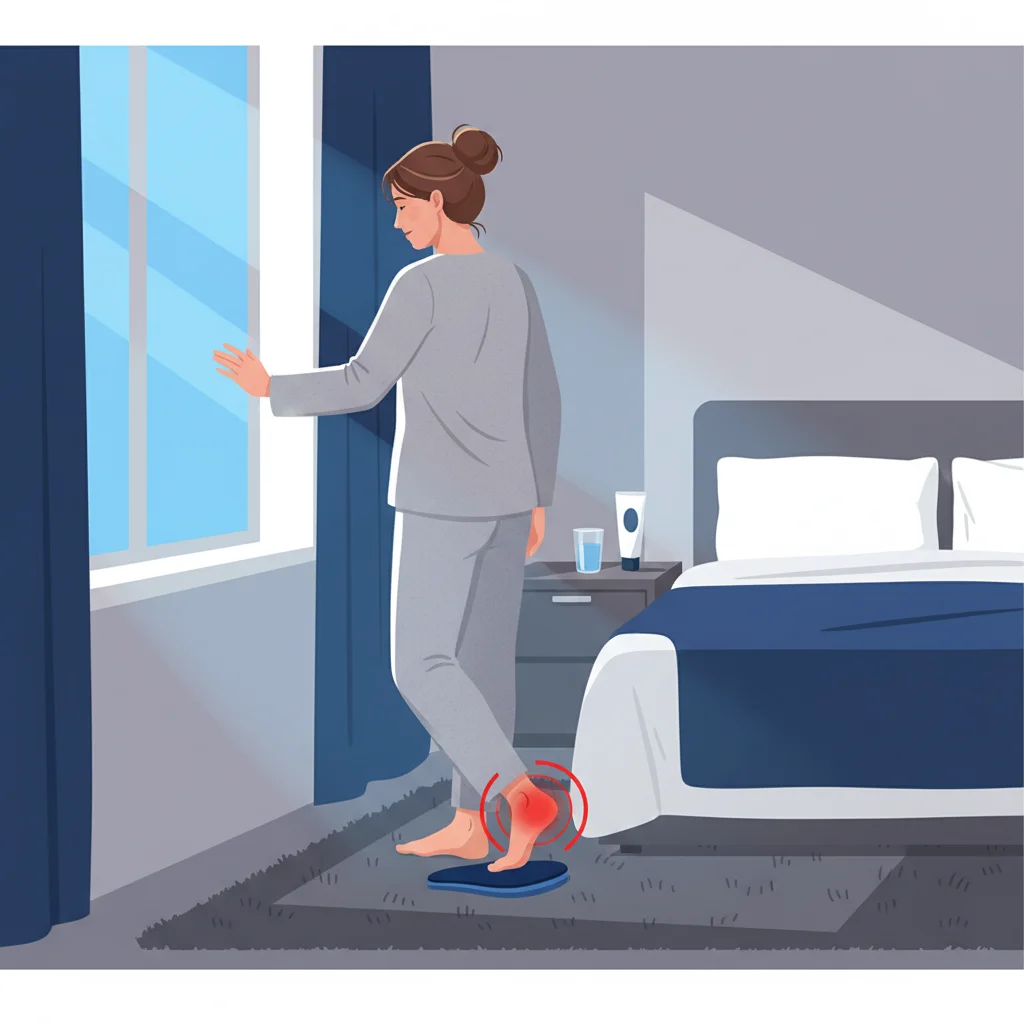
A woman steps out of bed onto a rug, her bare foot highlighted with blue, representing the heel pain in the morning that many experience.

What Causes Heel Pain in the Morning in Bridgewater, NJ

If you wake up each morning and feel a sharp jolt of pain in your heel the moment your feet hit the floor, you are not alone. Heel pain in the morning is one of the most common complaints podiatrists hear, and it affects people of all ages and activity levels. At PS Foot and Ankle in Bridgewater, NJ, our team helps patients identify the root cause of morning foot pain and develop a plan for lasting relief. Understanding why this pain happens is the first step toward getting back to your daily routine without dreading those first steps out of bed.

Why Your Heels Hurt Most With Those First Steps

Morning heel pain occurs because the soft tissues in your foot contract and stiffen during sleep. When you spend hours off your feet, blood flow to the heel and arch decreases, and structures like the plantar fascia and Achilles tendon settle into a shortened position. The moment you stand, your full body weight loads onto these cold, stiff tissues before they have had time to warm up and stretch. This sudden mechanical stress produces that familiar stabbing or aching sensation that many patients describe. The key takeaway is that morning heel pain is typically a sign of tissue irritation, not structural damage, and it responds well to consistent treatment.

Plantar Fasciitis: The Most Common Culprit Behind Morning Foot Pain

Plantar fasciitis is the leading cause of heel pain in the morning, accounting for the majority of cases seen in podiatric practices. The plantar fascia is a thick band of connective tissue that runs from the heel bone to the base of the toes, supporting the arch with every step. When this tissue becomes inflamed or develops micro-tears, it produces characteristic plantar fasciitis symptoms that are most intense first thing in the morning.

How the Plantar Fascia Tightens Overnight

During sleep, the foot naturally points downward, allowing the plantar fascia to contract into a shortened state. When you take your first steps, the fascia stretches rapidly under load, pulling against the inflamed attachment point at the heel bone. According to the Mayo Clinic, this cycle of overnight tightening and morning re-stretching is what makes plantar fasciitis pain so predictable. Many patients notice the pain eases after several minutes of walking as the tissue gradually warms up.

Risk Factors That Make It Worse

Several factors may increase the likelihood of developing plantar fasciitis symptoms:

  • Flat feet or unusually high arches that alter weight distribution
  • Prolonged standing on hard surfaces, common in retail, healthcare, and teaching professions
  • Excess body weight that increases mechanical load on the fascia
  • Tight calf muscles or Achilles tendons that limit ankle flexibility
  • Worn-out shoes with minimal arch support
  • A sudden increase in physical activity, such as training for a local 5K or hiking in the nearby Watchung Reservation trails

Other Heel Pain Causes You Shouldn't Ignore

While plantar fasciitis is the most frequent diagnosis, other conditions can produce similar morning symptoms. Understanding the full range of heel pain causes and solutions helps ensure you receive the right treatment rather than managing the wrong condition.

Achilles Tendinopathy and Heel Bursitis

Achilles tendinopathy affects the tendon connecting the calf muscle to the heel bone, producing pain at the back of the heel rather than the bottom. Heel bursitis, an inflammation of the fluid-filled sac near the Achilles insertion, may cause similar discomfort. Both conditions tend to worsen with activity and may feel stiff in the morning, though the pain location differs from plantar fasciitis.

Stress Fractures and Nerve Entrapment

Stress fractures in the calcaneus (heel bone) can develop gradually from repetitive impact, especially in runners and active individuals across Somerset County. Tarsal tunnel syndrome, a nerve entrapment condition, may produce burning, tingling, or numbness along the inner heel. Rheumatoid arthritis and reactive arthritis can also trigger heel pain that is notably worse after periods of rest. Your podiatrist can use imaging and clinical evaluation to distinguish between these heel pain causes.

At-Home Strategies for Morning Heel Pain Relief

Many patients find relief from morning foot pain by adopting consistent daily habits. These strategies work best when started early and maintained over several weeks. Always consult your podiatrist before beginning a new routine, especially if symptoms are severe.

Stretches You Can Do Before Getting Out of Bed

Before placing your feet on the floor each morning, try these gentle exercises:

  1. Flex your feet up and down 10 times to increase circulation to the plantar fascia
  2. Use a towel looped around the ball of your foot to gently stretch the arch for 30 seconds per foot
  3. Roll your foot over a frozen water bottle for two minutes to combine stretching with cold therapy
  4. Perform slow ankle circles in both directions to mobilize the joint

Night splints, which hold the foot in a flexed position during sleep, may also help reduce that initial morning stiffness.

Choosing the Right Footwear and Insoles

Supportive shoes with structured arch support and cushioned heel cups can significantly reduce strain on the plantar fascia throughout the day. Avoid walking barefoot on hard floors, especially first thing in the morning. Over-the-counter insoles may provide temporary relief, though many patients at our office at PS Foot and Ankle choose to do custom orthotics as they are specific to your feet and provide maximum support.

A person's hand touches their neck, possibly indicating pain or discomfort. Heel pain in the morning can signal more serious issues, according to PS Foot and Ankle.

When Morning Heel Pain Signals Something More Serious

Most cases of morning heel pain improve with conservative care, but certain warning signs suggest the need for a professional evaluation. Knowing when to see a podiatrist can prevent a manageable condition from becoming a chronic problem.

Seek an evaluation if you experience any of the following:

  • Pain persisting for more than two weeks despite rest and home care
  • Visible swelling, bruising, or redness around the heel
  • Numbness or tingling in the foot or heel
  • Pain that worsens progressively throughout the day rather than improving
  • Heel pain in both feet simultaneously
  • Difficulty bearing weight or changes in your walking pattern

A podiatric evaluation typically includes a physical examination, gait analysis, and imaging such as X-rays or ultrasound to determine the precise cause of your symptoms.

Professional Treatment Options for Persistent Heel Pain

When home care is not enough, a podiatrist can develop a targeted treatment plan based on your specific diagnosis. Patients seeking custom orthotics for foot pain and other clinical interventions have several proven options available at our office, PS Foot and ankle, in Bridgewater, NJ,

Custom Orthotics and Physical Therapy

Custom orthotics are prescription insoles molded to your unique foot structure, designed to redistribute pressure and support the arch where it needs it most. Physical therapy programs often include targeted stretching, eccentric strengthening exercises for the calf and foot, and manual therapy techniques. Research suggests that combining orthotics with a structured physical therapy program may produce better outcomes than either approach alone.

Building a Long-Term Plan to Prevent Morning Heel Pain

Preventing heel pain from returning requires ongoing attention to foot health. At our Bridgewater practice, we encourage patients to adopt habits that protect their feet for years to come, especially those who enjoy walking the paths at Duke Island Park or staying active throughout Central New Jersey.

Consistency matters more than intensity. A daily five-minute stretching routine for the calves and plantar fascia may do more to prevent morning heel pain than any single treatment session.

Long-term prevention strategies include:

  • Increasing activity levels gradually (no more than 10% per week)
  • Maintaining a healthy weight to reduce repetitive stress on the heel
  • Stretching the calves, Achilles tendon, and plantar fascia daily
  • Rotating between two or more pairs of supportive shoes
  • Replacing athletic shoes every 300 to 500 miles
  • Scheduling periodic foot health checkups, especially if you have a history of heel pain

Morning heel pain does not have to be a permanent part of your routine. With the right combination of home care, professional guidance, and preventive habits, many patients return to full, pain-free activity. The team at PS Foot and Ankle in Bridgewater, NJ is ready to help you take that first step toward relief, whether you are dealing with plantar fasciitis, Achilles tendinopathy, or another condition affecting your daily comfort.

Sources

  1. Mayo Clinic — Plantar Fasciitis: Symptoms and Causes
  2. American Academy of Orthopaedic Surgeons — Plantar Fasciitis and Bone Spurs

Frequently Asked Questions

Why does heel pain feel worse first thing in the morning?

Morning heel pain typically occurs because the plantar fascia and Achilles tendon contract and stiffen during sleep. When you stand, your full body weight loads onto these shortened, cold tissues before they can warm up and stretch, causing that familiar stabbing sensation with your first steps out of bed.

Is plantar fasciitis the only cause of morning heel pain?

Plantar fasciitis is the most common cause, but other conditions may contribute to morning heel pain, including Achilles tendinitis, heel spurs, stress fractures, and nerve entrapment. A podiatrist can perform a thorough evaluation to determine the specific source of your discomfort and recommend an appropriate treatment plan.

How long does it typically take for morning heel pain to improve with treatment?

Most patients may notice improvement within several weeks of consistent treatment, though full recovery from plantar fasciitis can take several months. Stretching, supportive footwear, and activity modification are often effective first-line approaches. Talk to your doctor if pain persists beyond a few weeks of home care.

What stretches can help reduce heel pain in the morning?

Gentle calf stretches and plantar fascia stretches performed before getting out of bed may help reduce morning pain. Flexing the foot and rolling the arch over a frozen water bottle are commonly recommended techniques. Consistent daily stretching helps keep the tissues flexible and may prevent overnight tightening.

Should I see a podiatrist for heel pain?

A podiatrist specializes exclusively in foot and ankle conditions and is often the best first choice for heel pain.

Can heel pain in the morning go away on its own without treatment?

Mild cases of morning heel pain may gradually improve with rest and proper footwear, but persistent pain often requires targeted intervention. Without treatment, the condition may worsen or become chronic. Early stretching, arch support, and activity modification typically lead to better outcomes than waiting for symptoms to resolve naturally.

What is the most common cause of heel pain?

Plantar fasciitis is the most common cause of heel pain, particularly the sharp pain felt with the first steps in the morning. It results from inflammation or micro-tears in the plantar fascia, the thick tissue band supporting the arch. Risk factors may include prolonged standing, tight calf muscles, and unsupportive footwear.

Call PS Foot & Ankle 732-443-3975